Table Of Content

Each individual would experience an AB sequence, where the durations of the baseline phases vary. Another possibility is to target different behavior in the same individual in a multiple-baseline across behavior design. For example, a skills training program to improve social behavior could target different aspects of such behavior in a sequential fashion, starting with eye contact, then posture, then speech volume, and so on.
Overview of ABA and ABAB Designs
In yet a third version of the multiple-baseline design, multiple baselines are established for the same participant but in different settings. For example, a baseline might be established for the amount of time a child spends reading during his free time at school and during his free time at home. Then a treatment such as positive attention might be introduced first at school and later at home. Again, if the dependent variable changes after the treatment is introduced in each setting, then this gives the researcher confidence that the treatment is, in fact, responsible for the change. As an example, consider a study by Scott Ross and Robert Horner (Ross & Horner, 2009).
What Are Experimental Designs?
In the top panel of Figure 10.6, there are fairly obvious changes in the level and trend of the dependent variable from condition to condition. Furthermore, the latencies of these changes are short; the change happens immediately. This pattern of results strongly suggests that the treatment was responsible for the changes in the dependent variable. In the bottom panel of Figure 10.6, however, the changes in level are fairly small. And although there appears to be an increasing trend in the treatment condition, it looks as though it might be a continuation of a trend that had already begun during baseline.
Definition and Explanation of ABAB Design
One goal of the study was to establish experimental control by the intervention and to minimize as many extraneous factors as possible. Overall, direct replication can help establish generality across participants. It cannot answer questions about generality across settings, behavior change agents, target behaviors, or participants that differ in some way from the original experiment (e.g., to adults diagnosed with type 1 diabetes). In a systematic replication, the methods from previous direct replication studies are used in a new setting, target behavior, group of participants, and so on [73]. Effects of internet-based CM for smoking cessation also were systematically replicated in an application to adolescent smokers using a single-case design [74].
ND-Affirming Alternatives to ABA Therapy
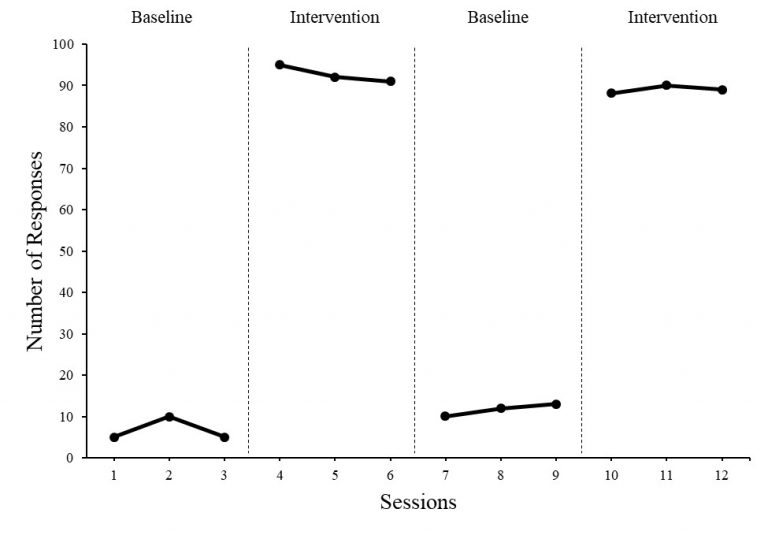
In doing so, we consider the questions they address and the conditions under which they are well suited to answer those questions. The most basic single-subject research design is the reversal design, also called the ABA design. During the first phase, A, a baseline is established for the dependent variable. This is the level of responding before any treatment is introduced, and therefore the baseline phase is a kind of control condition. When steady state responding is reached, phase B begins as the researcher introduces the treatment. There may be a period of adjustment to the treatment during which the behavior of interest becomes more variable and begins to increase or decrease.
Multiple-Baseline Design Across Participants
Group data are described using statistics such as means, standard deviations, Pearson’s r, and so on to detect general patterns. In an alternating treatments design, two or more treatments are alternated relatively quickly on a regular schedule. For example, positive attention for studying could be used one day and mild punishment for not studying the next, and so on. Or one treatment could be implemented in the morning and another in the afternoon. The alternating treatments design can be a quick and effective way of comparing treatments, but only when the treatments are fast acting. The systematic comparisons afforded by SCDs can answer several key questions relevant to optimization.
Data Analysis in Single-Subject Research

Split up your expenses into fixed costs(e.g., rent, web hosting services) and variable costs (e.g., anticipated staff hiring, etc.). Most BCBAs start in the field because they want to make a social impact and help others. Many like the idea of opening a clinic because they want to expand their reach and be their own boss. However, some BCBAs make the mistake of underestimating how much business, marketing, and non-clinical work goes into starting an ABA practice.
But with their multiple-baseline design, this kind of coincidence would have to happen three separate times—a very unlikely occurrence—to explain their results. The A-B-A, or reversal, design is one of the most recognized, single-case experimental designs in both research and practice (although in practice, the return to baseline is followed by a return to the treatment, or B, phase). Sometimes this is in the form of a singular life-changing event, but more often is just a part of everyday living. An example of the former might be the sudden death of a very close friend or relative and of the latter, starting an exercise program. So most people skip the return to A, or at least try to, once they make a positive life change.
Designate a specified therapy box or basket for storing tools used during ABA-at-home therapy sessions.
The changing criterion design is also relevant to optimizing interventions [34]. In a changing criterion design, a baseline is conducted until stability is attained. Then, a treatment goal is introduced, and goals are made progressively more difficult. Behavior should track the introduction of each goal, thus demonstrating control by the level of the independent variable [28]. For example, Kurti and Dallery [35] used a changing criterion design to increase activity in six sedentary adults using an internet-based contingency management program to promote walking.
(Note that averaging across participants is less common.) Another approach is to compute the percentage of non-overlapping data (PND) for each participant (Scruggs & Mastropieri, 2001)[4]. The greater the percentage of non-overlapping data, the stronger the treatment effect. Perhaps the simplest example would be a multiple baseline across individuals with similar problems.
A combined treatment could also be added, and depending on results, a return to one or the other treatment could follow (e.g., BCDCB, where D is the combined treatment). Furthermore, if a new treatment becomes available, it could be tested relative to an existing standard treatment in the same fashion. One potential limitation of such designs is when a reversal to baseline conditions (i.e., no treatment) is necessary to document treatment effects. Such a return to baseline may be challenging for ethical, reimbursement, and other issues. The SCD standards prioritizes visual analysis of the time-series data to assess the reliability and magnitude of intervention effects [29, 31, 40]. Visual analysis prioritizes clinically significant change in health-related behavior as opposed to statistically significant change in group behavior [13, 41, 42].
During this period, the dependent variable is measured repeatedly under control conditions. The active ingredient in the intervention, incentives contingent on objectively verified smoking abstinence, was not introduced until the treatment phase. Why is the reversal—the removal of the treatment—considered to be necessary in this type of design? Notice that an AB design is essentially an interrupted time-series design applied to an individual participant. Recall that one problem with that design is that if the dependent variable changes after the treatment is introduced, it is not always clear that the treatment was responsible for the change.
This pattern of results strongly suggests that the treatment was not responsible for any changes in the dependent variable—at least not to the extent that single-subject researchers typically hope to see. Because of their efficiency and rigor, SCDs permit systematic replications across types of participants, behavior problems, and settings. This research process has also led to “gold-standard,” evidence-based treatments in applied behavior analysis and education [29, 79]. More importantly, in several fields, such research has led to scientific understanding of the conditions under which treatment may be effective or ineffective [79, 80].
We can also detect, however, an increasing trend in the early portion of the treatment condition. Thus, we need to continue the treatment condition until there is no undesirable trend before returning to the baseline condition. But, the meaningfulness of this effect requires additional considerations (see the section below on “Visual, Statistical, and Social Validity Analysis”).
It has been described that Applied Behavior Analysts are analogous to physicians, who develop treatments for biological problems based on basic medical research. This results in reliable data to be collected and used in modifying treatment. Decisions about what treatment to use, and whether or not the treatment actually works, are dependent upon the analysis of this data. ABA therefore is a scientifically measurable approach to treating autism, and all conclusions are tied back to observable changes in behavior. We treat children, teens and adults who are diagnosed with autism and other language, communication, behavioral and developmental disorders. We use the principles of Applied Behavior Analysis to decrease inappropriate behaviors while increasing functional skills.
Children learn important life skills such as playing, socializing, asking for what they want, brushing their teeth, and getting dressed. Treatment will involve using different techniques to work toward the individual's goals. Treatment sessions can sometimes be as short as an hour, but they often last for several hours at a time. When the behavior has been successfully produced, the individual will receive positive reinforcement, but will not be rewarded if they do not successfully produce the desired response. She decides to install high vinyl fences so that her neighbor can no longer stare at her.


No comments:
Post a Comment